Self-Driving Cars Are a Distant Future In SA (For Now)
At the South African Auto Week in 2024, industry leaders were refreshingly candid Peter van Binsbergen, BMW South Africa CEO, put it plainly: “Driving a car is so complex… especially driving in a mixed mode where one person is driving the car themselves and another is driven by a computer – that is such a hurdle to cross and I don’t see it here in the short term.” He added that, realistically, we might see autonomous vehicles in controlled zones, but “you won’t see them on the roads for quite some time, as far as I’m concerned.”
There’s something both comforting and grounding about that. While exciting tech carries us into the next generation, South Africa will still need to address current realities before new tech takes the reins on the road.
Testing in South Africa: Mercedes-Benz Takes the Lead
Even so, South Africa hasn’t been entirely silent in the autonomous test-drive world. Mercedes-Benz’s Intelligent World Drive saw an S-Class prototype navigating routes from Cape Town streets to dusty Western Cape roads. The testing focused on tricky local quirks – unpredictable pedestrians, unique road signs, and rural crossovers. They even tested digital map validation and a prototype Digital Light system.
As one report put it, South African roads “pose some very special challenges: different road surfaces, wild animals on the road, and many pedestrians… crossing the road completely unexpectedly.”
Global vs Local: Setting Expectations
Around the world, we’re seeing progress – but mostly in well-defined conditions. For example, Mercedes-Benz’s Level 3 “Drive Pilot” feature is geared for highways, and it’s rolling out on German roads at speeds up to 95 km/h. But this is about controlled environments, precise sensors, HD maps. One would say it’s still far from everyday city driving.
Meanwhile, in South Africa, our mixed traffic flows, rural routes, and sometimes poorly marked lanes make such systems much harder to adapt. As one local motoring writer put it. “Self-driving cars aren’t ready for our wild roads, but they’re getting friendlier.” That line captures it perfectly, increments of progress brings us closer, but the road ahead is bumpy.
How Do Self-Driving Cars Actually Work
So, how do self-driving cars work? Here’s a more in-depth breakdown:
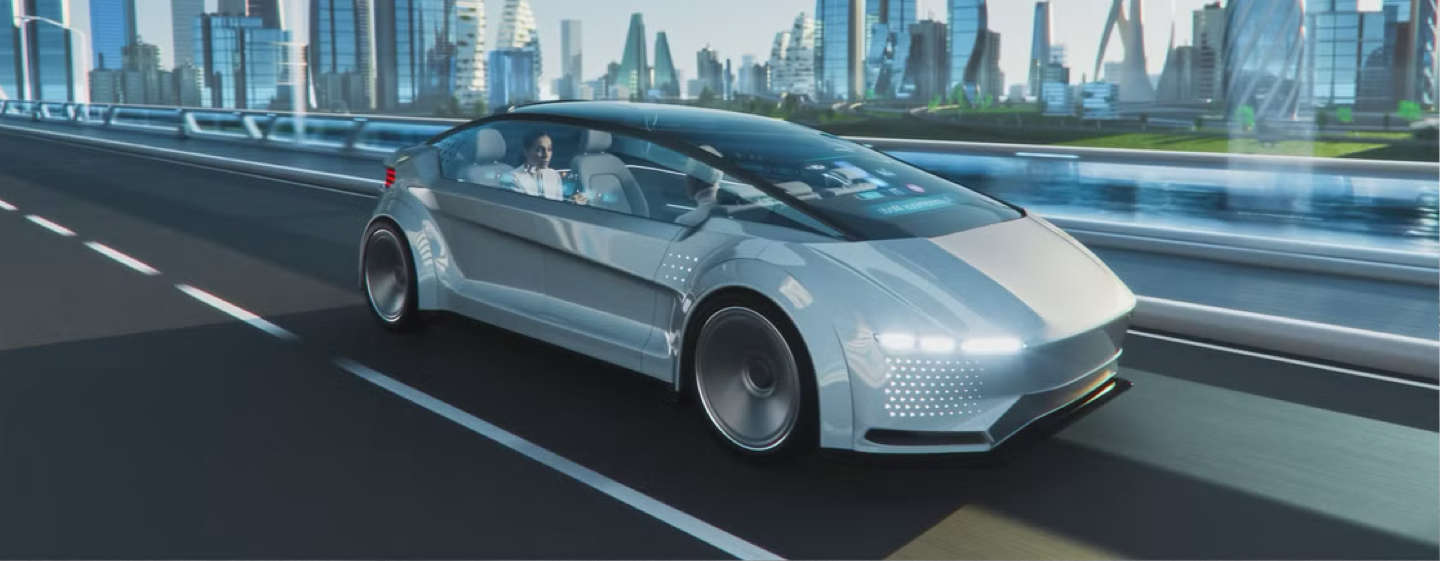
When it comes to autonomous vehicles, especially Level 3 Automation (A.K.A Drive Pilot), we’re talking about a car that can take over full driving duties under specific, well-defined conditions. For instance:
- Cruising down a highway with clear lane markings.
- Predictable traffic.
- Clear or consistent weather.
In these moments, you don’t have to keep your hands on the wheel, BUT you do have to remain alert, because the vehicle can ask you to take over at any time.
Rather than relying on human senses, the car uses a sensory suite – a combination of advanced hardware and software that constantly scans and interprets the world around it:
- Radar: Measures distance and speed of nearby vehicles, even in poor visibility like fog or rain.
- LiDAR (Light Detection and Ranging): Creates detailed 3D maps of the environment using laser pulses, helping the car see the shape of an object.
- Cameras: Spot lane markings, traffic lights, pedestrians, and even subtle cues like a cyclist's hand signal.
- Ultrasonic sensors: Great for close-range detection, such as parking or slow manoeuvres.
- Microphones: Believe it or not, they can detect emergency sirens before you can see the ambulance.
The sensory input is fed into high-definition maps and positioning systems that are accurate to within centimetres – not just the general GPS location you get on your phone. The car’s onboard computer processes all of this data in real-time, predicting what other road users might do next.
The last Line of Defence: Safety
Even the smartest AI can encounter surprises – a pothole that wasn’t on the map or lane markings so faded they might as well be invisible. When that happens, the car’s handover protocol kicks in:
- Warning: The system alerts you (visually, audibly, or even via seat vibration) that it’s time to take over.
- Countdown: If you don’t respond, the car gradually slows down.
- Fail-safe stop: If there’s still no response, the vehicle will brake to a safe halt, often pulling over if possible,
Are the Benefits of Self-Driving Cars Worth It?
When put into practice (safely), autonomous systems could deliver real-world benefits:
- Fewer accidents, by reducing human error.
- More predictable traffic flow, potentially easing congestion.
- Increased mobility for people who have trouble driving.
- Better environmental impact, if cars optimise routes and speeds.
Even partial adoption of these technologies could offer tangle improvements, not just tech for tech’s sake.
Gradual, Not Instant: What Might Come to SA First?
So, what’s realistically coming to SA in the near term? Probably level 1 to level 2 features (think adaptive cruise control, lane-keeping assist, automated emergency braking). Yes, many vehicles already have these systems, but these features aren’t designed to replace responsible driving (even in self-driving cars). For South Africa, it’s about balancing the benefits against the risks.
We’re not going from 0 to 100 in one leap. Instead, we’ll likely see gradual adoption of smarter driver-assistance tools. It’s best to think of them as building blocks for a fully autonomous future.
Bottom Line
Here’s the bottom line: South Africa’s journey toward autonomous vehicles is very much ongoing – but incremental. We’re not hurtling headlong into a driverless era, but step by step, we’re building smarter mobility. At its core, self-driving technology is just a well-choreographed dance between sensors, AI, and safety systems. They replicate human judgement but with faster reaction times and zero distractions.
For now, expect more driver-assist features before you see fully self-driving cars. We’ll need stronger regulations, upgraded infrastructure, and lots of testing – especially here, where our roads bring a unique set of challenges. However, with each small advancement, each test drive, and every discussion is a milestone. The future is on its way – just don’t be surprised if it takes a few more scenic detours along the way.
While it seems to be a dream come true, it’s still got a way to go. No matter how tech-savvy these vehicles get, paying attention is key. That’s why taking a defensive driving course is essential to your everyday safety, and even better for securing the best car insurance quotes.
Until then, we’ll continue to embrace the future of modern driving.
Speaking of cool cars, get the latest updates on car reviews and launches and meet some of the most top performing vehicles of our time, from bakkie and SUV to hatchback and performance.
Unique Automotive Industry Updates for South Africa
The Best Car Tracking Devices You Can Buy