
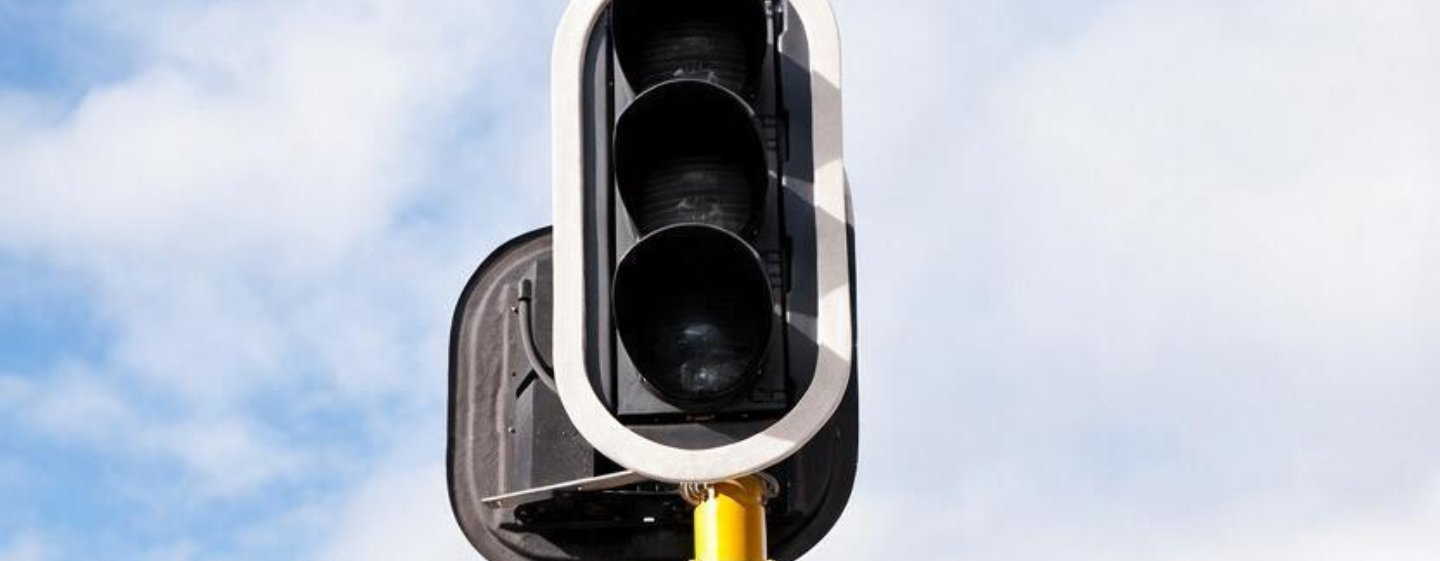
How to Stay Safe when the Robots Stop Working
You pull up to a busy intersection and the robots are off. Traffic is building from every direction, nobody is sure who should go first, and someone is already edging forward. It is a situation almost every South African driver has faced, and it is one where a little knowledge goes a long way.
Power cuts ripple through the whole motoring world, as we explored in our look at load shedding's impact on the motor body repair sector, but for most drivers the most immediate effect is the dead intersection. Even without national load shedding, signals still go out. This guide covers what to do when they do.
Why Traffic Lights Go Out
Signals can fail for several reasons: a local power outage, a fault in the equipment, storm damage, or cable theft and vandalism. Whatever the cause, the situation at the intersection is the same, and so is the correct response. If a storm is behind the outage, visibility and grip are probably poor as well. The advice in our winter road safety guide applies here too: if you must drive in adverse weather, allow extra time and drive slowly and defensively.
The Golden Rule: Treat It as a Four-Way Stop
According to BusinessTech, an intersection that normally has traffic lights should be treated as a four-way stop when the lights are out. The same article points out that many drivers do not follow the rule, which is a big reason these intersections descend into chaos.
In practice, that means every driver stops. Not slows down, and not rolls through because the road looks clear, but comes to a complete stop at the stop line. The K53 routine for stopping at an intersection, set out in the National Road Traffic Act's K53 test notice, begins with checking your rear-view mirror, then decelerating and braking to a stop. Doing it properly every time is the habit to build.
Quick Reference Guide
| Situation | What to Do |
|---|---|
| Approaching the intersection | Slow down early |
| Reaching the stop line | Come to a complete stop |
| Determining right of way | Yield to pedestrians and vehicles that arrived first |
| Taking your turn | Proceed cautiously and be prepared to give way |
| Intersection blocked ahead | Wait until you can clear the intersection |
| Traffic officer directing vehicles | Follow their instructions |
| Poor visibility at night or in rain | Reduce speed and increase observation |
Who Goes First?
The K53 rule for a four-way stop is simple: yield to pedestrians and to vehicles that arrived at the intersection first. In other words, first come, first served, whichever direction each driver is heading. Pay attention to the order in which vehicles reach the stop line, so you always know where you are in the queue.
Four-Way Stop Rules to Remember
| Rule | What It Means |
| First come, first served | Vehicles that arrive first should proceed first |
| Yield to pedestrians | Pedestrians always have priority |
| No "driver on the right" rule | Do not assume vehicles on the right automatically have priority |
| Non-conflicting traffic may move together | Vehicles travelling in opposite directions can often proceed simultaneously |
| Right turns require caution | Check that oncoming traffic is yielding before turning |
| Stay alert | Other drivers may not follow the rules correctly |
A few points worth knowing, based on guidance from Arrive Alive:
● Do not assume the driver on your right goes first. Arrive Alive notes that this rule is not South African law and comes from countries such as the UK and Zimbabwe.
● Vehicles whose paths do not cross can often move at the same time, for example, two cars travelling in opposite directions.
● A right turn across oncoming traffic is allowed in turn, but the oncoming driver may not see it that way, so check before you commit.
● Applying the one-vehicle-at-a-time rule strictly is rare in practice, so stay alert rather than relying on others to follow it.
Step by Step: Crossing a Dead Intersection
1. Slow down early
MasterDrive CEO Eugene Herbert advises slowing down on approach even if the road looks empty. Ease off well before the intersection, because you cannot be sure what is about to cross your path.
2. Come to a complete stop
Stop fully at the stop line, even when no other vehicle is in sight. A rolling stop leaves you with less time to react and makes your intentions harder for other drivers to read.
3. Look in every direction
Expect traffic from more than four directions, including drivers turning right across your path. Right-turning vehicles often get less attention than they should, so check every lane again before you move. Give pedestrians the same safe crossing you would hope for yourself.
4. Take your turn, but be ready to give way
Do not assume that because it is your turn, everyone else will wait. If another driver moves toward the space you were about to use, let them go. It is better to lose a few seconds than to risk a collision or a confrontation.
5. Move off only when you can clear the intersection
Do not enter the intersection unless there is room on the other side for your vehicle. Getting stuck in the middle blocks the cross traffic and is one of the quickest ways to turn a slow intersection into a gridlocked one.
When Other Drivers Do Not Follow the Rules
You will not be able to control how everyone else behaves, so plan for it.
How to Respond to Unsafe Driver Behaviour
| Situation | Recommeneded Response |
| Driver ignores the stop rules | Let them go rather than risking a collision |
| Driver bypasses the queue on the shoulder or over yellow lines | Expect them to merge back into traffic |
| Drivers become impatient or aggressive | Stay calm and maintain a safe following distance |
The habit that ties it all together is the one experts repeat most often: check, double-check, and check again, even while you are crossing.
If a Traffic Officer Is on Duty
Sometimes a traffic officer or point-duty official will be directing traffic at a dead intersection. Follow their instructions in place of the dead signals, give them your full attention, and wait for a clear signal before moving.
Night, Rain and Poor Visibility
A dead intersection at night is harder than one in daylight, because streetlights may be affected by the same outage. Switch your headlights on early, reduce your speed more than you would by day, and look carefully for pedestrians, cyclists and motorbikes, which are harder to spot in the dark.
If There Is a Bump
Intersections without working signals are where low-speed bumps tend to happen. If anyone is hurt, call emergency services immediately. If it is minor and the vehicles can be driven, move to a safe place, switch on your hazards, photograph the scene and the damage, and exchange details before you contact your insurer.
Many of these incidents leave only cosmetic damage, and some drivers prefer not to claim from their insurer for small repairs, to protect their premiums and no-claims bonus. Our article on Scratch and Dent Plan explains how separate cover for minor chips, scratches and dents works, and our comparison of car paint repairs versus Scratch and Dent Cover will help you weigh up your options.
Report the Fault
Once you are through, report the outage to your local municipality, usually through its roads or traffic department or its fault-reporting channel. It takes a minute, and it helps get the signals working again sooner for everyone else.
Frequently Asked Questions
What should I do when traffic lights are not working?
Treat the intersection as a four-way stop. Come to a complete stop, yield to pedestrians and vehicles that arrived first, and proceed only when it is safe.
Who has right of way at a dead traffic light?
The vehicle that arrived first at the stop line has right of way. Drivers should also yield to pedestrians.
Does the driver on the right automatically go first?
No. The article explains that this is not South African law and should not be relied upon.
Should I stop even if the intersection looks empty?
Yes. Drivers should come to a complete stop at the stop line, even when no other vehicles are visible.
What if another driver ignores the rules?
Allow them to proceed and avoid confrontation. Losing a few seconds is preferable to risking an accident.
What should I do if a traffic officer is directing traffic?
Follow the officer's instructions instead of the traffic signals.
How should I approach a dead intersection at night?
Switch on your headlights, reduce your speed, and watch carefully for pedestrians, cyclists and motorbikes.
What should I do after a minor collision at a dead traffic light?
Move to a safe place if possible, switch on your hazards, photograph the scene and damage, exchange details, and contact your insurer.
Should I report a traffic light outage?
Yes. Report it through your local municipality's roads, traffic department or fault-reporting channel.
The Bottom Line
A dead traffic light does not have to mean chaos. Treat the intersection as a four-way stop, come to a complete stop, let the vehicles that arrived first go first, and stay alert for drivers who do not know or follow the rule.
A little patience at a dark intersection costs you a few seconds. A rushed decision can cost far more.
Sources & Further Reading:
How Much Can a Service Plan Save You Over 5 Years? Costs, Benefits and Resale Value Explained


